

Ecommerce Website Development: A Sales-Ready Foundation
Define your online store’s products, orders, and returns from the outset.
Operations behind the storefront
Ecommerce development needs to deliver more than attractive product pages: purchases must use the correct price, stock, and delivery terms. We treat catalog, cart, payment, shipping, and returns as connected business rules. We distinguish retail stores from distributor ordering portals and examine what your operational team can and cannot do during discovery. Order management should be as understandable as the storefront. We use a remote development model for ecommerce software inquiries from across Turkey and Gulf and Arab countries such as the United Arab Emirates, Saudi Arabia, and Qatar. Payment and delivery options are limited to the conditions your business verifies for the target market. We review order scenarios in English or Turkish and hand over releases remotely.

Service scope
We design product discovery through order confirmation alongside delivery and sales terms.
View detailsModel bundles, quantity discounts, quote-based sales, and other requirements beyond standard store flows.
View detailsWe match provider responses to orders through payment, cancellation, and refund workflows.
View detailsTransfer consistent data using marketplace identities, category attributes, and channel-specific conditions.
View detailsWe separate packing approval, label generation, and delivery status in the operational workflow.
View detailsManage SKUs, warehouse quantities, and reserved stock through explicit rules.
View detailsWe build B2B portals around price groups, pack quantities, and order approvals.
View detailsTogether with your team, we plan filters, product URLs, and images alongside search accessibility.
View detailsControl store transitions using legacy identities, customer records, and URL mappings.
Starting with categories and a few images can leave commercial decisions changing throughout development. First understand what you sell, where you deliver, how prices are calculated, and who prepares orders. Digital, physical, personalized, and wholesale products need flows suited to their sales rules. The scope explains how those differences affect customers and operations.
Instead of adding every possible module, define the flow needed for customers to buy and staff to fulfill. Our store features guide (in Turkish) can help preparation. We separate payment, stock, and delivery states make missing decisions easier to identify before launch.
Hosted services, open-source stores, and custom software assign responsibilities differently. A useful comparison includes exports, updates, extensions, and nonstandard rules alongside initial cost. Unnecessary custom development for a simple catalog can add cost, as can repeatedly patching complex distributor pricing with unsuitable plugins.
| Approach | Potential benefit | Boundary to review | Decision question |
|---|---|---|---|
| Hosted store service | Hosting and core functions together | Data access and changes depend on provider terms | Do the available features fit your sales rules? |
| Open-source platform | An established, extensible ecosystem | Plugin compatibility, security, and updates need ownership | Can maintainable components meet the requirements? |
| Custom development | A domain model shaped around the business | Analysis, implementation, and operations need a plan | Do distinct rules justify the investment? |
We can use PHP/Laravel and MySQL, but technology alone does not demonstrate quality. Pricing ownership, authoritative stock, and order transitions must be clear. Suitable existing components are adapted rather than unnecessarily rewritten. Distinct commercial processes enter the custom development scope.
We review legacy exports early. Product identities, URL mappings, consent history, and readable order history are separate migration tasks. Incompatible password formats may require secure resets. We check relationships as well as counts, and agree where open orders will be completed during cutover.
A customer reaching a success page does not prove collection. We verify server notifications using the provider’s signature or validation method, then match amount, currency, and order identity. Repeated notifications must not create another order or stock deduction. We keep transaction evidence for cases where the browser never returns after a network failure.
iyzico, PayTR, and bank payment gateways are assessed against the business account, API, and sales model. Installments, international cards, and currencies vary by account. Foreign providers require country and account eligibility checks. Do not make a payment method a committed deliverable before verifying availability.
Prefer secure provider components to storing card data. Saved-card features should use permitted tokens rather than raw card details. We keep payment status separate from fulfillment so unpaid orders are not shipped by mistake. We retain provider transaction IDs and order links for reconciliation.
A product listed on your store and a marketplace does not guarantee identical stock at every moment. API delays, limits, and warehouse actions can create differences. Together with your team, we choose the authoritative source and define available quantities, safety stock, and channel allocation. Reservations and allocation should reflect sales volume and reduce the risk of selling the last unit twice.
Marketplace integration needs more than a product title. We map categories, channel IDs, variants, and pricing policies. Store and marketplace prices need not match where commissions or promotions differ. We retain channel order identities to prevent duplicates and make failed transfers visible to staff.
In shipping integration, generating a label, preparing a package, and delivery are separate events. Model multiple packages, warehouses, and delayed items where needed. A generated label may not justify telling the customer the order has shipped; agree notification timing.
We map carrier events before turning them into store statuses. Failed delivery, customer returns, and warehouse receipt require different actions. Invoice and ERP integrations need clear ownership for order, shipping, and accounting records, so updating one screen does not create an unintended document elsewhere.
We connect customer options to the units tracked by the warehouse. Together with your team, we decide whether colors and sizes have separate SKUs, distinguish filter attributes from purchasable options, and define bundle stock effects. Order history retains the options available at purchase time. Preserve names, prices, and selected options at purchase time.
One customer company may have several users, with separate preparation and approval roles. We group pricing, minimum packs, and payment terms differ from B2C rules. Balance displays need a clear source and update time; an unconnected screen is not real-time ERP financial information. Together with your team, we define quote validity and whether quotes reserve stock.
Project examples can inform discussion, but features in another store are not automatically standard. Together with your team, we select functions using staff roles and real orders. An easy dashboard helps prevent mistakes and shows necessary information at the right stage, not merely fewer buttons.
Useful filters can create many similar URLs. Indexing every combination or canonicalizing everything to one category is not automatically correct. We separate valuable pages with distinct demand and content from temporary sorting parameters. Together with your team, we plan variant URLs, pagination, and unavailable products around the actual catalog. Permanent removal and temporary stockouts need different decisions.
Organic search and shopping ads may use the same product source but have different measures of success. Send correct transaction IDs and currencies; refreshing a payment page must not count another sale. We assess speed and accessibility on actual page types. Improvements address identified barriers, not guaranteed rankings or sales volumes.
Our process
Remote meetings use sample products and orders to define scope. Catalog readiness, provider access, and business rules determine the schedule, not page count alone.
We review merchant, warehouse, customer service, and finance roles. We include partial returns and insufficient stock alongside normal orders.
We prepare categories, products, and checkout alongside identities, variants, and pricing. Visual and business-rule approval are separate reviews.
We use sample imports to establish mappings. We check counts, relationships, and image links, with cleanup responsibilities written into scope.
We implement provider flows using authorized accounts. We link repeated notifications, failures, and channel synchronization to agreed rules.
We review purchasing and fulfillment end to end. Together with your team, we assign responsibility for open orders, legacy URLs, and final transfer during store migration.
We cover cancellations, stock adjustments, and returns as well as products. We record accounts, configuration, and operational responsibilities.
Pricing
Two stores with the same product count can need different software. Proposals assess catalog work, checkout, external connections, and cutover separately, including materials your team supplies.
Reusing suitable components and creating a distinct commercial model need different analysis. Future maintenance ownership is part of the decision.
Variants, missing SKUs, and scattered images can increase effort regardless of product count. Content production differs from data import.
Payment, carrier, and ERP API scope, test access, and account requirements affect integration. Provider licenses are separate from development.
Custom selectors, bundles, and multi-step ordering need additional design, including mobile behavior and errors.
Company permissions, price lists, approvals, and payment terms create distinct flows. Multiple currencies need calculation and presentation rules.
Define hosting, backups, maintenance, and legacy migration ownership. One-time delivery differs from ongoing operations.
For a firm quote: Share a sample product file, sales channels, and order flow for an itemized scope. We hand over developed source code and work under a written contract with invoices. Written terms define one year of post-delivery technical support. Domains, hosting, payment commissions, and shipping charges are assessed separately.
Get a Free QuotePortfolio
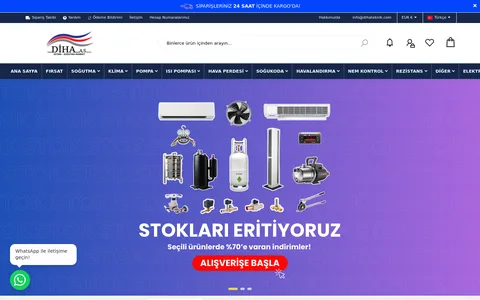
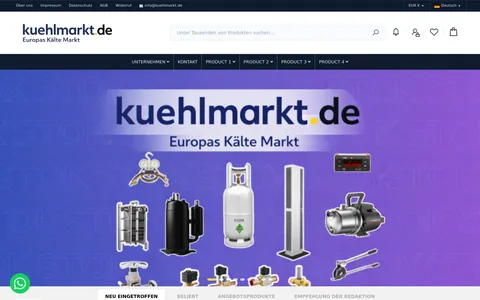
These websites are live. Visit them to explore the work yourself.
All project referencesFAQs
Physical deductions and temporary reservations can be separate. Reserve stock while payment is pending and release expired holds. Define late notifications explicitly. Duration depends on product demand and provider behavior rather than one universal rule.
Yes, where commissions, promotions, or policy require it. Define which system calculates each price. Updating a base price must not erase channel-specific rules, and the fallback after promotions expire needs to be known.
The scope can link order items to separate shipments, each with its own tracking and status. Define remaining reservations, notifications, and cancellations for partially shipped orders.
No. Delays, outages, and warehouse changes can create differences. Sources, reservations, and channel safety stock reduce risk. Failed updates remain visible; connection alone does not justify perfect-synchronization claims.
Yes, through a shared service layer. The server verifies totals instead of maintaining separate client pricing. Product and cart states use the same sources; notifications, sessions, and versions belong to the mobile development scope.
Preserve the purchase-time allocation. Coupon distribution, changes to promotion eligibility, and shipping refunds depend on commercial rules. Track payment refunds separately from quantities returned to inventory.
It depends on exports and your authority to process the data. Review relationships and missing fields using samples. Incompatible passwords may require resets. Map old URLs appropriately without guaranteeing unchanged search visibility.
Think it through with us
Verifiable order, inventory, document, and payment flows between systems.
View detailsSEO that considers crawling, search intent, and conversion data together.
View detailsCampaign management grounded in search intent, commercial value, and verified conversions.
View detailsBlog
Define your online store’s products, orders, and returns from the outset.
Compare sales channels by contribution margin, customer relationships, and inventory.
Make data flows between payments, warehouses, and shipping traceable.
Get a quote
Let's clarify your needs