From fleet rules to a clear booking journey

Car Rental Booking Software with Clear Request and Confirmation States

Car rental booking software must account for more than dates. Pickup times, vehicle classes, maintenance blocks, and one-way returns change what your business can offer. HazırSoft builds rental websites that explain real fleet rules through a clear customer journey. Staff-confirmed requests and instantly confirmed bookings have different technical responsibilities, agreed from the outset.

  • Separate vehicle classes and individual vehicles
  • Pickup and return windows with dates and times
  • Maintenance and transfer blocks
  • Distinct requests, temporary holds, and confirmed bookings
  • Total-price breakdowns explaining optional extras
  • Connections to location and fleet records
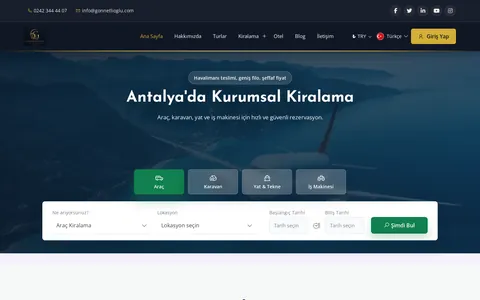
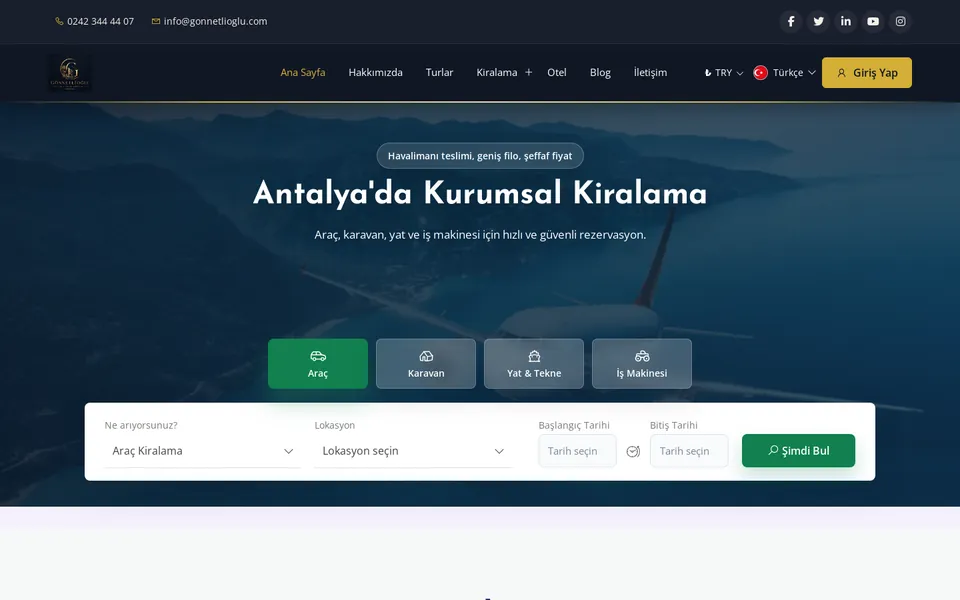
gonnetlioglu.com
Gönnetlioğlu — Online booking system and multilingual website
Our live project Gönnetlioğlu · Car, Camper & Yacht Rental

Industry-specific modules

Fleet Rules Define the Rental Journey

Customers may reserve a class while your operations team assigns a particular vehicle. The website must say whether it promises a specific model or a vehicle in the selected class. Availability follows that decision. Cleaning time, maintenance, and transfers between locations also affect capacity. A catalog alone does not establish that the fleet is ready to accept bookings.

Vehicle Classes and Catalog

Transmission, fuel, passenger capacity, and luggage information support selection. Representative class imagery is labeled, and a card does not promise a specific model unless the business can deliver it. License plates and internal vehicle identifiers stay outside the public catalog.

Time-Based Availability

Return times, preparation periods, and maintenance can affect availability. Even date-only displays explain interval boundaries. Instant bookings require server-side controls so simultaneous requests cannot confirm the same remaining capacity.

Pickup and Return Locations

We agree location hours, airport arrangements, and out-of-hours services separately with your operations team. One-way rentals account for vehicle return and transfer needs. Flight details are collected only where relevant to pickup rather than in an unrestricted personal-notes field.

Booking Status Model

Requests, temporary holds, confirmed bookings, and cancellations are distinct states visible to customers. Staff-approved workflows do not promise final availability on submission. Hold durations follow your business rules.

Rental Payments and Security Deposits

We model rental charges, advance payments, and security deposits separately. A card authorization hold is not presented as available unless the provider supports it. Card data is not stored in the application; authorized payment flows and transaction states are reviewed.

Location Roles and Permissions

Booking staff see requests while handover teams see the relevant vehicle and time. Central access is separately defined across locations. Price changes and manual cancellations can record the responsible user.

Language Versions That Preserve Terms

International customers need to understand license requirements, mileage limits, and return policies as well as vehicle descriptions. Language changes can retain dates and locations. Your business approves legal and commercial wording rather than relying on automatic translation.

Fleet-System Integrations

Where official API access exists, we review reservations, vehicle statuses, and locations. The website does not become an uncontrolled second availability source. Your team agrees what to disable or whether to accept requests when data is delayed.

From Date Search to Confirmed Booking

Search begins with pickup and return locations plus a timed date range. Date order, location hours, and minimum rental periods are checked before showing results. If individual vehicles within a class determine capacity, search operates at class level; reserving a specific vehicle is a separate model. Vehicles unavailable because of maintenance or damage are excluded. Finding capacity and protecting it through payment are different tasks. Instant booking needs defined hold and confirmation stages to prevent two customers confirming the same last unit. A request workflow makes clear that staff confirmation is still required.

Selected classes, locations, and price breakdowns remain attached throughout the transaction. Changing dates triggers a new calculation rather than leaving the old total visible. Browser returns and provider notifications may arrive at different times, so confirmation is not based only on the customer’s screen. Failed payments, expired holds, and cancellations have defined capacity effects. Custom software development establishes the state model, while integrations exchange information with fleet and payment systems. An email notification alone does not mean vehicle allocation is complete.

Explain Rental Conditions Alongside the Total

A daily rate does not explain the full amount due. Duration calculations, additional drivers, child seats, one-way charges, and out-of-hours services appear separately where applicable. Tax and currency displays follow your commercial policy consistently. Security deposits are not confused with rental charges, and the interface states whether they are collected or authorized as a hold. Insurance coverage, excesses, and exclusions follow your verified contractual wording. The website does not provide insurance advice or invent vague promises of unlimited protection. If rates change, confirmed bookings retain a record of the terms accepted.

  • Age and license-duration requirements are readable before selecting the relevant class.
  • Fuel policy, mileage limits, and one-way return conditions are summarized.
  • Cancellation and change procedures explain who takes each action.
  • Identity and license documents are not unnecessarily requested in the initial search.

Collection stages, retention, and authorized access follow actual operational needs. Legal wording requires specialist review; standard software fields are not a compliance certificate. SEO services can support discovery of real pickup locations and rental classes without fabricated service points, duplicated location pages, or ranking guarantees.

Define Fleet Rules Through Delivery Scenarios

  1. Rental model: Distinguish a specific vehicle from a class commitment and choose staff approval or instant booking.
  2. Calendar rules: Document preparation time, maintenance blocks, out-of-hours pickup, and one-way returns using real examples.
  3. Pricing definitions: Agree duration, season changes, extras, and security-deposit fields. Review official integration documents if existing software owns prices.
  4. Transaction screens: Design search, results, terms, and confirmation together, showing an evolving breakdown rather than surprise final-step fees.
  5. Acceptance scenarios: Include simultaneous last-capacity requests, delayed payment notifications, cancellation, cross-location returns, and invalid time windows.
  6. Operations handover: Assign responsibility for manual entries, vehicle blocks, and booking changes. Map old website URLs during migration.

Work is done under a written contract with invoices. Delivery includes booking-state diagrams, setup information, and developed source code. One year of technical support covers accepted search and booking functions within written boundaries. Changed fleet-provider APIs or new pricing models require separate assessment. Your operations team receives not only the screens, but an explanation of which events change which records.

Request-Only Sites and Instant Booking Differ in Scope

Capacity sources matter alongside fleet size. When telephone, agency, and website bookings share vehicles, we must understand how all channels update availability. An isolated web calendar that ignores other reservations is not reliable inventory. A request-only site can be simpler. Instant confirmation requires concurrent-capacity controls, payment events, and cancellation handling. Locations, pickup rules, seasons, migration, and languages become separate scope items. Payment and fleet-provider subscriptions and transaction fees are not disguised as development costs; your accounts and permissions are also required.

In the quote form, explain where bookings are recorded today and which actions you want the website to confirm. Customer records and vehicle catalogs are migrated separately, with a defined purpose and retention requirement for old reservations. Web design services support readable search and mobile use, but a fast interface alone does not prove fleet data is current. Acceptance includes business rules, integration access, and operations approval alongside design. The launch schedule follows those dependencies.

FAQs

Car Rental — frequently asked questions

Can’t find your question?Let's clarify your needsSend us a message

Does the customer reserve a model or a vehicle class?

That depends on what your business can commit to. A class booking states clearly that the imagery is representative and that a vehicle from that class will be provided. A model-specific promise requires individual-vehicle capacity management. Search cards and confirmations use one consistent approach instead of mixing the two.

Does a request-only site guarantee availability?

No. It records preferences for staff to assess and confirm. Any displayed calendar explains its scope and freshness. Instant confirmation requires separate controls covering all booking sources and concurrent requests.

Can the security deposit and rental payment be one transaction?

Your policy and provider capabilities determine the approach. Collection, authorization holds, and refunds can be different transaction types. Customers see the method used, and card data is not held in the web application. Unsupported deposit holds are not simulated in the interface.

How does a one-way return affect availability?

The vehicle may stay at the new location or require a transfer back, changing when it is ready for another rental. The calendar reflects that rule. Adding a one-way fee alone is insufficient; location and preparation time also affect capacity.

What appears if payment succeeds but notification is delayed?

The verified provider result is reconciled with booking status; a browser return alone is not final proof. Intermediate states and customer explanations are planned in advance. Repeated notifications must not create another booking, and staff can review the relevant record and transaction identifier.

Do confirmed bookings retain their original pricing rules?

The accepted breakdown and conditions can be stored with the reservation. Later catalog updates do not silently change it. If dates or extras change, your policy determines recalculation and the customer separately approves the new summary.

Get a quote

Let's Discuss Your Project

Let's clarify your needs

Message us on WhatsApp